Compactors for film waste and edge trim.
A film compactor turns loose film waste into stackable bars using pressure and heat — reducing waste volume by up to 80%. PAVEL designs and builds KP series compactors for the film and packaging industry in Halle (Westfalen).
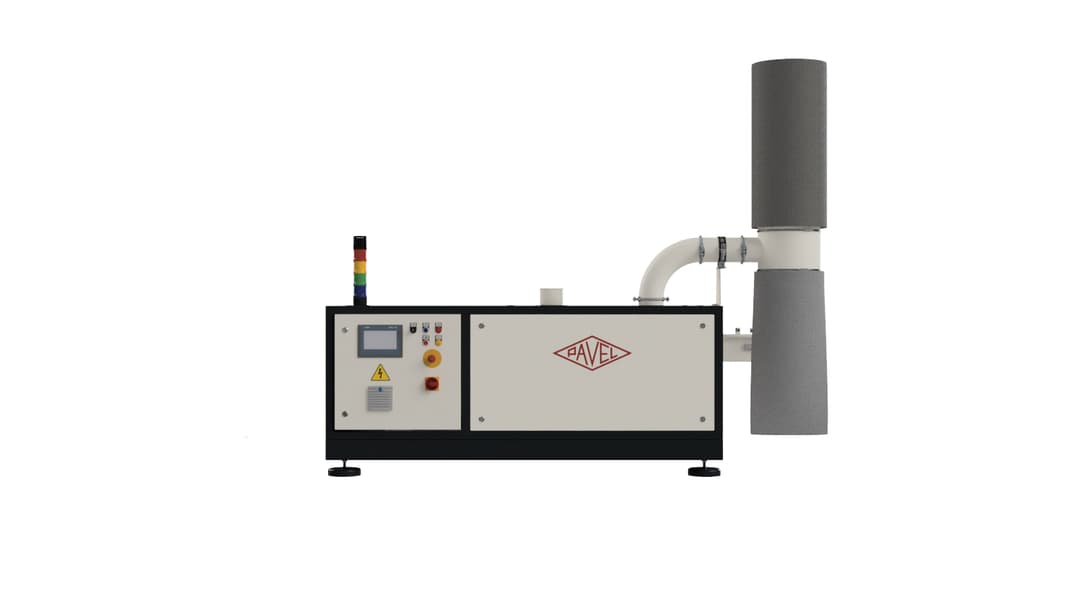
Rotate with the left and right arrow keys. Home shows the first view; End shows the last.
Wherever film is processed, waste is produced.
In the extrusion of flat and thermoformed film, at the laminating line, at the slitting and winding machine, in flexographic printing, in bag production: edge trim and punching waste arise at every station. They no longer contribute any value — yet they still generate costs.
Winders, shredders, skips and presses filter valuable raw materials out of the process at considerable expense. Instead, we have developed a type of machine that picks up waste independently at the source and compacts it without any additional aids.
It really is that simple.
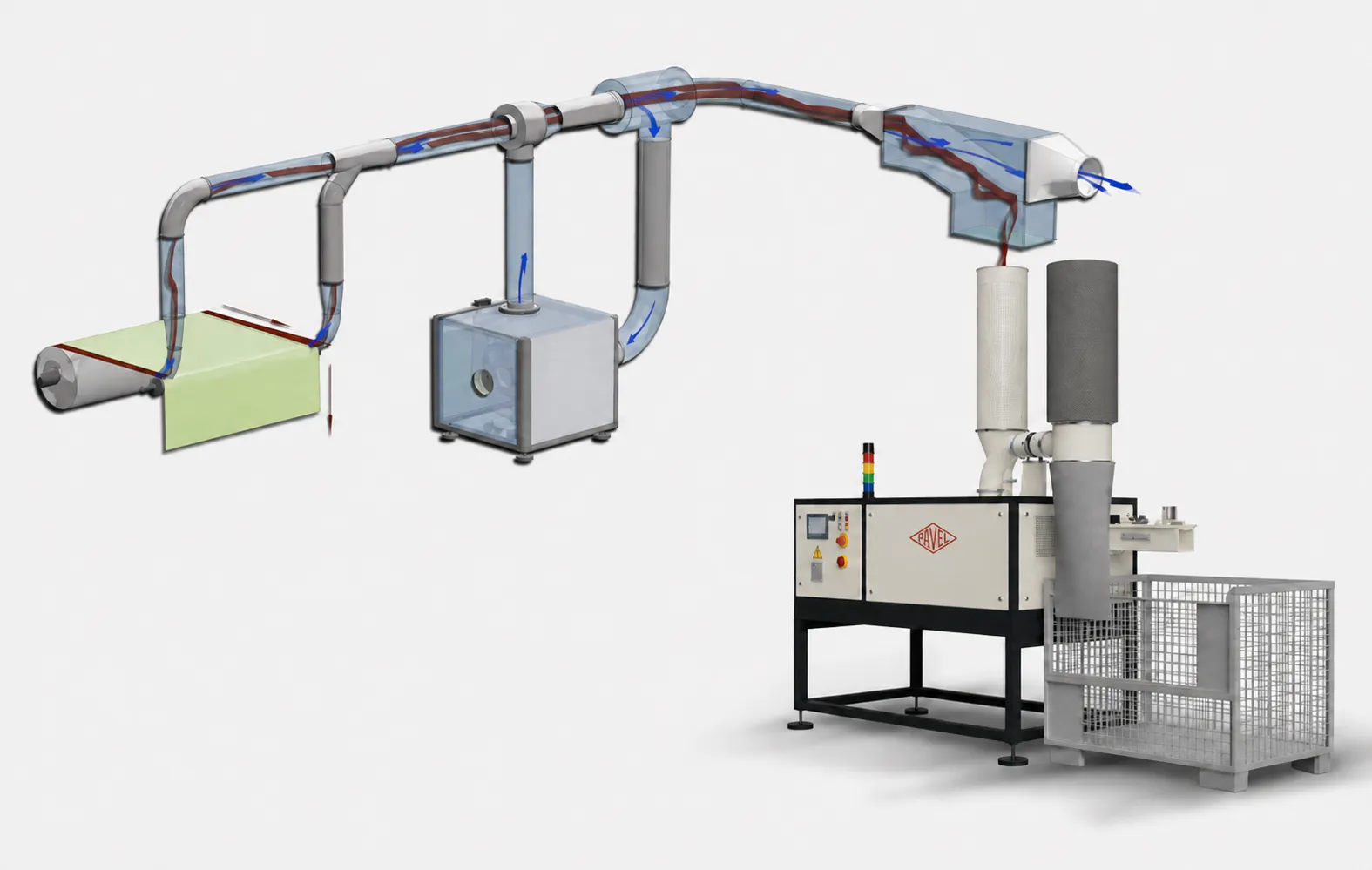
Air and edge trim are separated.
In the separator, the film edge trim is separated from the air stream and fed into the film compactor in a controlled manner. This provides the basis for optimum compaction results.
Connection
The compactor is connected to the waste-producing system via a pipe system. Installation on the other side of the hall requires an existing hall extraction system.
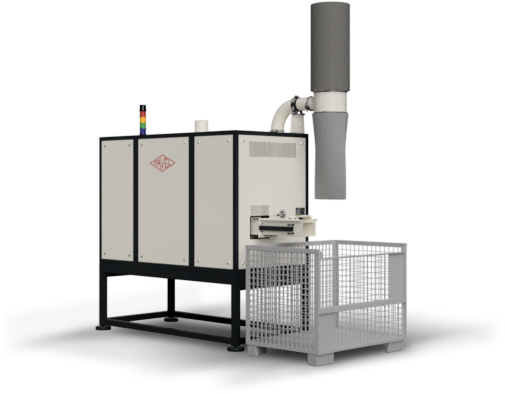
Separation & compaction
In the separator, the air stream and film edge trim are separated. The material is fed into the film compactor in a controlled manner; the crankshaft and piston compact it evenly.
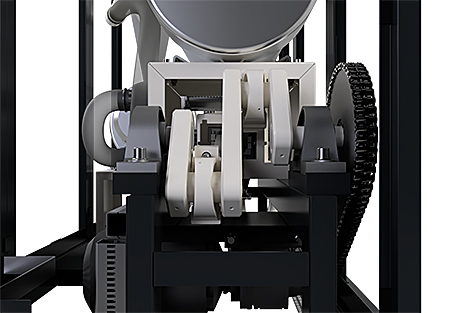
Heating channel
The piston pushes the compacted film into the heating channel. Here we use the thermoplastic properties of the film: under heat the outer skin fuses and seals the strand — with digital temperature control.
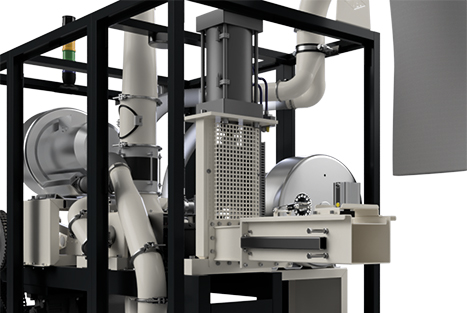
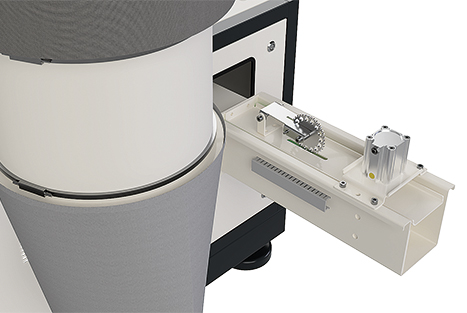
Bars at the discharge
The compacted bars are cut to the desired length with the cut-off device. They can then be stacked by material type and handled conveniently in mesh boxes or on pallets.
virtually all thermoplastic films and their composites — see material questions
Same principle, three performance classes.
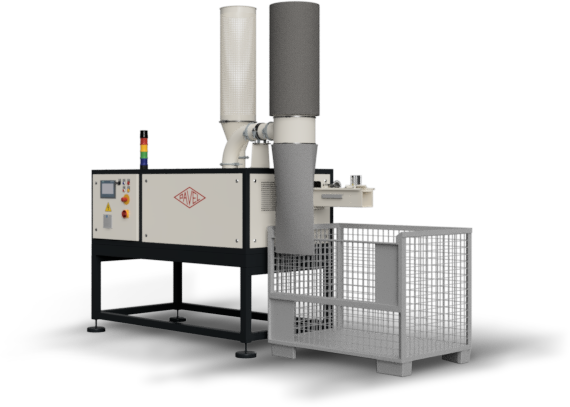 The Compact One
KP200
Compacts punching waste and packaging remnants at the existing collection point — by hopper downstream of the current extraction system.Throughputup to 100 kg/hInfeedHopperInstallationat the collection pointMains connection400 V · 32 AView Model Page →The Edge Trim SpecialistKP2000
The first choice for active edge-trim extraction — with performance reserves for film speeds up to 800 m/min.Throughputup to 150 kg/hInfeedDirect connection or hopperInstallationat the line or in the hall with existing hall extractionMains connection400 V · 63 AView Model Page →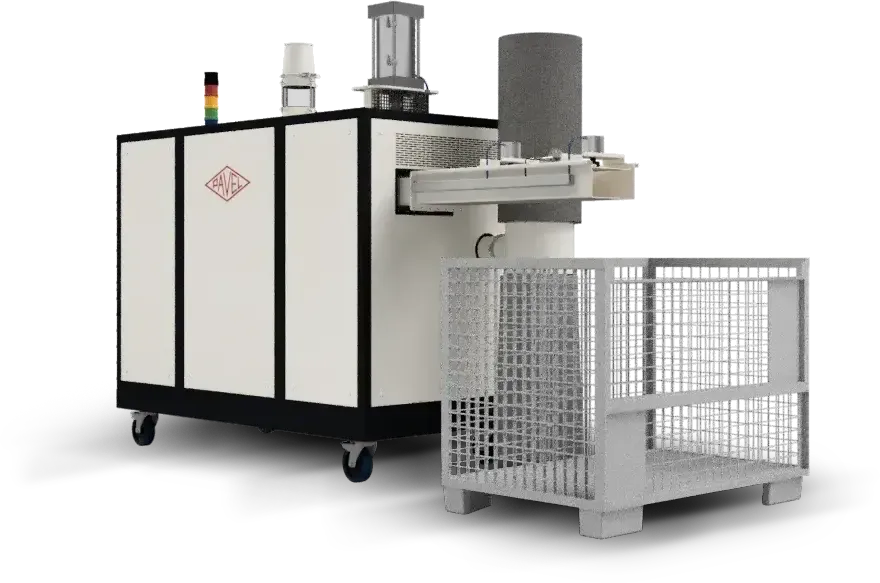 The Flagship
KP2000 MAX
The highest material throughput in the series at up to 250 kg/h — for demanding BOPP, laminating and coextrusion lines.Recycling Edition for shredded bulk materialThroughputup to 250 kg/hInfeedDirect connection or hopperInstallationmobile on castorsMains connection400 V · 63 AView Model Page →| Feature | KP200 | KP2000 | KP2000 MAX |
|---|---|---|---|
| Waste type | Punching waste, packaging remnants | Edge trim, active extraction | Edge trim, higher material throughputShredded bulk material in the Recycling Edition → |
| Web speed | up to 400 m/min | up to 800 m/min | up to 800 m/min |
| Throughput | up to 100 kg/h | up to 150 kg/h | up to 250 kg/h |
| Infeed | Hopper | Direct connection or hopper · internal hopper optional | Direct connection or hopper |
| Installation | at the collection point | at the line or in the hall with existing hall extraction | mobile on castors |
| Connection ratings | 400 V, 50 Hz, 32 A | 400 V, 50 Hz, 63 A | 400 V, 50 Hz, 63 A |
| Bar dimensions | 110 × 100 mm | 150 × 100 mm | 230 × 100 mm |
| Control system | Siemens S7-1212C · touch panel | Siemens S7-1214C · touch panel | Siemens S7-1214C · touch panel |
What changes in day-to-day operation.
Volume gone, floor space back
Loose film becomes solid bars: fewer containers, longer collection intervals, lower transport and storage costs.
Flexible integration
Either directly at the extrusion or slitting line, or via an existing extraction system.
Runs in step with your line
Automatic intake and digital temperature control: compaction runs by itself, without interrupting production.
Sorted by type instead of mixed
The recyclable material remains available unmixed and is compacted ready for recycling — one material type per bar.
Built for continuous operation: apart from purchased components, we manufacture the entire compactor at PAVEL in Halle/Westfalen — in the same facility that handles contract metal processing.
Frequently asked questions about materials.
When people first hear about film compactors, their first question is usually about the material. Here are the short answers — we will be happy to discuss everything else using your specific film.
Ask a Question →Which films can be compacted?
Thermoplastic films — the compactor uses precisely this property: heat fuses the material, sealing the outside of the bar so it remains permanently solid. After that, only throughput determines the model size.
Do composite films work too?
Yes. Multilayer and coextruded films are drawn in, compacted and welded in exactly the same way as mono films.
What about paper-film composites?
We have also worked with these in the past — they work well when the mix is right. Tell us about your material and we will assess it.
Brochures and datasheets for the KP series.
All dimensions, connection ratings and options as a PDF — or as a datasheet request if you need a specific configuration.